
The UK benefit system has no single income limit above which you lose everything. Different benefits operate on entirely different rules — some are means-tested with smooth tapers, others are not means-tested at all, and some cut off sharply at a specific threshold. Understanding which rule applies to which benefit is the only way to plan a side hustle correctly when you are claiming.
This guide covers every major UK benefit in 2026 and exactly how self-employed or side hustle income interacts with each one — with specific figures, worked examples, and the declarations you are required to make.
The Key Distinction: Means-tested vs Non-means-tested
This is the most important framework for this entire topic.
Means-tested Benefits
These benefits are calculated based on your income and savings. Earning more from a side hustle reduces the amount you receive. Examples: Universal Credit, Housing Benefit (legacy), Pension Credit, Council Tax Reduction, Income Support, income-based ESA and JSA.
Non-means-tested Benefits
These benefits are paid based on your circumstances (disability, caring role, national insurance contributions) and are not affected by how much you earn. Examples: Personal Independence Payment (PIP), Disability Living Allowance (DLA), Attendance Allowance, Carer’s Allowance (with one specific exception), new-style ESA and JSA, State Pension.
Child Benefit sits in a separate category — it is paid universally but is clawed back through the tax system once household income exceeds £60,000.
The practical implication: a side hustle that earns you £500/month will affect Universal Credit, will not affect PIP, may trigger the Child Benefit High Income Charge if your salary already puts you near the threshold, and may or may not affect Housing Benefit depending on your specific claim.
Universal Credit — the 55p Taper Rule

Universal Credit is the primary working-age means-tested benefit. For detailed rules specific to UC and self-employment, see our full guide on the specific rules for Universal Credit claimants. This section provides a summary of the income interaction.
The Taper Rate
For every £1 you earn above your work allowance (if you have one), your UC reduces by 55p. You always keep 45p of every extra pound — there is no earnings cliff-edge.
Work Allowances in 2026/27
Work allowances apply only to claimants with dependent children or a Limited Capability for Work assessment. If you have neither, the taper applies from the first pound of earnings.
- £427/month: claimants with children or LCW who also receive the housing element
- £710/month: claimants with children or LCW who do not receive the housing element
Savings Interactions
Savings between £6,000 and £16,000 reduce UC through a tariff income rule: for every £250 of savings above £6,000, DWP assumes £4.35/month of notional income, reducing your award accordingly. Side hustle profits that accumulate as savings will eventually trigger this if they push your savings above £6,000. Above £16,000 in savings, you do not qualify for UC at all.
The Minimum Income Floor (After 12 Months)
Once DWP classifies you as gainfully self-employed and the 12-month start-up period ends, the Minimum Income Floor applies. DWP assesses you as if you earn the equivalent of the National Living Wage for your expected hours, regardless of actual profit. In 2026/27, for a 35-hour expected week, the net MIF is approximately £1,681/month. If your actual profit is lower, UC is still calculated against the MIF figure.
Housing Benefit (Legacy Claimants)
Most new Housing Benefit claims are no longer possible for working-age adults — UC includes a housing element. However, some claimants remain on legacy Housing Benefit, particularly pensioners and those with specific circumstances.
How Self-employed Income Affects Housing Benefit?
Housing Benefit is means-tested. Self-employed profit is assessed as income and reduces your award. The calculation uses net weekly profit (after allowable expenses) as the income figure.
There is no smooth taper in Housing Benefit in the same way as UC. Housing Benefit uses a “taper rate” but the mechanics differ — roughly 65p reduction per £1 of net income above the applicable amount.
PIP Does Not Affect Housing Benefit
DLA and PIP do not count as income for Housing Benefit purposes. If you receive PIP and also receive Housing Benefit, your PIP award does not reduce your Housing Benefit. This is a critical point that many claimants get wrong, and DLA and PIP do not count as income for Housing Benefit, confirmed by Scope UK’s 2026 housing benefit guide.
Child Benefit and the High Income Charge

Child Benefit itself is universal — paid to all qualifying families regardless of income. The interaction with higher incomes works through the tax system, not the benefit itself.
The High Income Child Benefit Charge (HICBC)
If the highest earner in your household has adjusted net income over £60,000, a tax charge claws back 1% of Child Benefit for every £200 of income above £60,000. Once income reaches £80,000, the charge equals 100% of Child Benefit — effectively meaning Child Benefit is fully clawed back.
How a Side Hustle Creates Exposure?
If you earn £58,000 from employment and your side hustle generates £4,000 in net profit, your adjusted net income for HICBC purposes is approximately £62,000. You would owe 1% × (£2,000 ÷ £200) × Child Benefit amount = 10% of your annual Child Benefit back to HMRC as a tax charge.
This is declared on your Self Assessment return. Many people on salaries just below the £60,000 threshold discover this HICBC exposure only when their side hustle pushes them over it.
The Pension Contribution Offset
Personal pension contributions reduce your adjusted net income for HICBC purposes. If your gross income from salary and side hustle combined is just above £60,000, increasing pension contributions can bring adjusted net income back below the threshold — legally avoiding the charge.
Personal Independence Payment (PIP)

PIP is not means-tested. Side hustle income has no direct effect on PIP eligibility or award level. You can earn any amount from a side hustle and continue receiving PIP.
The PIP assessment focuses on how your condition affects your daily living and mobility — not on your income or working status. PIP is not means-tested, so income and savings do not affect eligibility. From April 2026, the enhanced daily living rate is £108.55 per week.
The important nuance: if your side hustle involves activities that are inconsistent with the level of disability or limitation you described in your PIP assessment, this could affect a reassessment decision — not because of the income, but because of what the activity demonstrates about your functional capability. DWP assessors can take evidence of activities into account during reassessments.
Benefit Cap Interaction
Households receiving PIP (or DLA, Attendance Allowance, Carer’s Allowance, or ESA support group component) are exempt from the Benefit Cap — regardless of their total benefit income.
Carer’s Allowance
Carer’s Allowance has a specific earnings limit that applies directly to side hustle income.
The £151/Week Net Earnings Limit
To qualify for Carer’s Allowance, your net earnings must not exceed £151 per week in 2026/27. Net earnings means income after deducting tax, National Insurance, 50% of pension contributions, and allowable work expenses.
Side hustle income is included in this net earnings calculation. If your employed income plus side hustle net profit exceeds £151/week, you lose Carer’s Allowance entirely.
There is no taper — it is an all-or-nothing cliff at £151/week net. Carer’s Allowance is £81.90/week (2026/27). Earning £1 over the net earnings limit means losing £81.90/week in Carer’s Allowance.
The Calculation for Side Hustlers
A carer with a part-time job earning £90/week net and a side hustle generating £65/week in profit would have combined net earnings of £155/week — exceeding the £151 limit and losing Carer’s Allowance.
If you are a Carer’s Allowance recipient planning a side hustle, calculate your net weekly income carefully before starting. The earnings limit is a hard cut-off with no gradual reduction.
Pension Credit
Pension Credit is a means-tested top-up for people over State Pension age on low incomes. Self-employed income — including side hustle profit — counts as income for Pension Credit purposes and reduces the award.
Guarantee Credit
Pension Credit Guarantee Credit tops your weekly income up to £227.10/week (single) or £346.60/week (couple) in 2026/27. Every pound of side hustle profit reduces Guarantee Credit by one pound — a 100% taper. There is no earnings-free amount.
Savings Credit
Savings Credit (available only to those who reached State Pension age before 6 April 2016) uses a more complex formula but side hustle income still counts toward the income assessment.
What to Declare?
If you claim Pension Credit and start a side hustle, you must notify the Pension Service of the change in your income. Failure to declare results in overpayment — which must be repaid.
The Benefit Cap — and How Side Hustle Earnings Can Exempt You?

The Benefit Cap limits the total benefits a working-age household can receive. In 2026, the benefit cap for families and lone parents in London is £442.31 per week (£23,000 per year), and outside Greater London it is £376.15 per week (£19,560 per year).
The Cap Exemption Through Work
If your household earns more than £881/month (net, after tax and NI) from employment or self-employment, your household becomes exempt from the Benefit Cap for that assessment period. Side hustle income counts toward this threshold.
This creates a specific opportunity: for households currently subject to the benefit cap, increasing self-employed earnings above the exemption threshold removes the cap entirely, not just reduces it. Once the assessment period shows household earnings of £881 or more after tax and National Insurance, the cap stops applying for that period.
A Word of Caution
The cap exemption applies period-by-period. A month with strong side hustle earnings removes the cap for that period. A month with low or zero earnings reapplies it. This can create significant volatility for households near the threshold with irregular income.
Council Tax Reduction
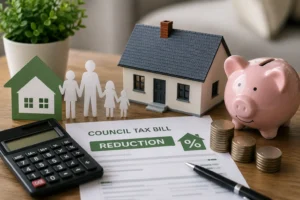
Council Tax Reduction (previously Council Tax Benefit) is administered by local councils and the rules vary by area. In most cases:
Self-employed income is assessed as income for CTR purposes. The calculation uses profit (income minus allowable expenses), not gross income. The taper rate is typically 20p reduction per £1 of income above the applicable amount — more gradual than UC but still significant.
Check your specific local authority’s CTR scheme — the rules genuinely vary, particularly in areas that have moved to local authority-designed schemes rather than the old national rules.
What You Must Declare and to Whom?
Universal Credit
Declare all side hustle income monthly in your UC online journal. Report the income in the assessment period in which it was received. Report your profit (income minus expenses), not gross income.
Housing Benefit (Legacy)
Report changes in self-employed income to your local council’s Housing Benefit team within 1 month of the change.
Child Benefit / HICBC
No ongoing declaration required — the HICBC is calculated through your Self Assessment return if your income exceeds £60,000.
Pension Credit
Notify the Pension Service when your income changes.
Carer’s Allowance
Notify the Carer’s Allowance Unit if your net earnings change in a way that takes you over or under the £151/week limit.
HMRC (Self Assessment)
If gross side hustle income exceeds £1,000 in the tax year, register for Self Assessment. This is separate from benefit declarations — both obligations run in parallel.
Frequently Asked Questions
Does side hustle income affect my PIP?
No. PIP is not means-tested. Side hustle income does not reduce or stop PIP payments.
I receive UC and started a small Etsy shop. When do I have to declare the income?
Declare income in each monthly assessment period when it is received — even if it is a small amount. Use your UC journal. Report profit (sales minus expenses), not gross sales.
Can a side hustle exempt me from the Benefit Cap?
Yes — if household net earnings from employment or self-employment reach £881/month or more. This applies period by period, so consistent earnings above the threshold are needed for consistent cap exemption.
My side hustle income varies month to month. How does UC handle this?
UC is assessed monthly. High-earning months reduce UC more; low or zero-earning months restore it. The Minimum Income Floor (after the 12-month start-up period) may smooth this out in DWP’s favour — using the MIF figure for low months even if actual earnings are lower.
Does Child Benefit stop if I earn above £60,000 from my side hustle?
Child Benefit itself continues. The High Income Child Benefit Charge is applied through your Self Assessment return and claws back 1% of Child Benefit for every £200 of adjusted net income above £60,000. It reaches 100% clawback at £80,000.
What to Read Next?
For the detailed rules on UC specifically — including the Minimum Income Floor, start-up period, and worked examples — see our guide on the specific rules for Universal Credit claimants.
For HMRC’s tax rules on your side hustle income alongside benefits, see our guide on the tax threshold and what counts as gross income.
Verified against DWP and HMRC guidance as of 11 June 2026. Benefit rates and rules change frequently — always confirm current figures at gov.uk or via a benefits calculator before making financial decisions. This article provides general information only. For personal advice, contact Citizens Advice or Turn2us.

More in Tax, Legal & HMRC

Late Tax Penalties for UK Side Hustlers in 2026 (Real Costs)
HMRC’s penalty system for Self Assessment has two separate tracks that run simultaneously: late filing penalties (for not submitting your return on time) and late payment penalties (for not paying the tax owed on time). Missing both triggers charges from both tracks on top of each other. The total cost can escalate quickly. This article […]

VAT Registration for UK Side Hustles (2026 Threshold Rules)
Most UK side hustlers will never need to register for VAT. The threshold — £90,000 of taxable turnover in a rolling 12-month period — puts VAT registration firmly in the territory of a full-time business rather than a supplementary income stream.Someone tutoring for £2,000 a year, reselling clothes on Vinted for £3,000, or doing occasional […]