
Amazon advertises Amazon Flex UK rates of £13–£17 per hour. After fuel, hire-and-reward insurance, vehicle maintenance, and tax, most UK car drivers take home between £6 and £12 per hour. That gap between the advertised rate and the realistic net is what this article is about.
The headline figure is not dishonest. It is simply incomplete. The £13–£17 is what Amazon pays per block hour. It tells you nothing about fuel costs on a rural route, what happens when you finish your deliveries early and get sent back for more, or what annual car maintenance looks like after 20,000 extra miles per year.
This is the honest version. Based on current 2026 data from Zego, SimplyQuote, NimbleFins, and driver community forums, this article gives you the full earnings picture so you can decide whether Flex makes sense for your situation before you buy the insurance.
For a broader comparison of UK delivery platform options, see our complete guide to UK side hustles.
How Amazon Flex Works?
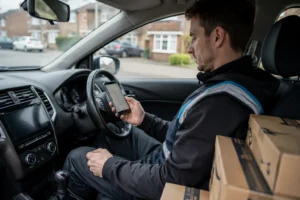
Amazon Flex is Amazon’s gig delivery programme in the UK. Drivers called delivery partners use their own vehicle to pick up packages from an Amazon depot and deliver them to customers within an assigned area.
The Block System
Unlike Deliveroo or Uber Eats, which assign individual deliveries on demand, Amazon Flex operates on a block booking system. A block is a pre-booked time slot, typically 2.5, 3, or 4 hours, during which you collect and deliver a set of packages. You see the block’s pay rate before accepting it.
Block rates in 2026: Amazon advertises £13–£17 per hour and publishes blocks priced accordingly. A 3-hour block might pay £45–£51. A 4-hour block might pay £52–£68. The variance depends on location, time of day, and current demand.
Fresh, Scheduled, and Instant Offers
Amazon Flex offers three types of blocks in the app:
Fresh blocks involve delivering Amazon Fresh grocery orders. These typically pay at the higher end of the rate range but involve specific time windows and can include refrigerated items.
Scheduled blocks are pre-booked in advance through the app and guaranteed once accepted. These are the most predictable income sources for regular Flex drivers.
Instant offers are short-notice blocks that appear when Amazon has excess delivery demand. These sometimes carry surge premiums above standard rates.
Requirements to Join
You need a car or van in roadworthy condition, a valid driving licence, a smartphone capable of running the Amazon Flex app, and hire-and-reward (H&R) insurance.
Standard personal motor insurance does not cover commercial delivery work. Amazon verifies your H&R insurance at onboarding and periodically thereafter.
A right to work in the UK check is required. Amazon Flex is not available on visa types that prohibit self-employment.
The Advertised Rate vs the Real Rate
This is the most important section of this article. The numbers below come from multiple UK sources, including Zego (April 2026), SimplyQuote (2026), NimbleFins (2026), and driver forums.
Gross Rate
Amazon advertises £13–£17 per hour. The actual rate depends on which blocks you accept. According to Indeed’s April 2026 UK salary data based on 252 driver reports, most Amazon Flex drivers earn £14–£18 per hour at the gross (before costs) level.
Net Rate After Costs
After fuel, hire-and-reward insurance, vehicle maintenance, and tax, most drivers take home between £6 and £12 per hour. The SimplyQuote 2026 analysis puts the range at £6–£12 net, with the most common outcome being in the £8–£10 range for standard car drivers.
The £17 Scenario Requires Specific Conditions
The high end of the range (£14–£17 net) is achievable but only for drivers who accept premium blocks during peak demand periods, complete routes efficiently, use a fuel-efficient vehicle (or electric car), and have secured low-cost H&R insurance through a pay-as-you-go provider.
Block Types and Which Pay Best?

Not all blocks are created equal. Based on driver community data, these are the patterns that most experienced Flex drivers follow.
High-value Blocks
Scheduled blocks in dense urban areas where delivery density is high and routes are short. Fresh grocery blocks which tend to pay a premium. Instant offer blocks during peak demand (Christmas, Prime Day, bad weather when other drivers cancel).
Low-value Blocks to Avoid
Rural blocks where route distances are long and delivery density is low. A £37 block that covers 80 rural miles costs £15–£25 in fuel alone, leaving a net of £12–£22 for what may take 2.5+ hours. That is £5–£9 per hour before tax and insurance.
As one experienced driver on MediaThrive noted: “Fresh blocks sometimes involve rural delivery routes, and although the official pay might look alright (e.g. £37 for a 2-hour block), once you factor in fuel, which could easily be £10 or more on a long run, you start to realise how slim the actual profits are.”
Blocks where you finish early but are sent back to the depot for more. Drivers who complete routes with more than 30 minutes remaining are often prompted to return for additional deliveries. This extends your time at lower effective pay. Experienced drivers account for this when selecting blocks.
The Practical Strategy
Accept blocks in areas you know well with high delivery density. Avoid rural blocks unless the rate compensates sufficiently. Check whether a block is Fresh (time-sensitive) before accepting the higher pay that reflects genuine additional complexity.
Use the driver community forums (r/AmazonFlexUK) to check current block quality in your specific depot area before signing up.
The Real Costs: What Reduces Your Take-home?

Hire-and-reward Insurance
This is the largest single cost for most new Flex drivers. Annual H&R policies for cars range from £1,100 to £2,500 per year depending on your claims history, location, and vehicle.
NimbleFins’ 2026 research puts typical annual courier car policies for experienced drivers at £1,800–£2,100.
Pay-as-you-go H&R insurance from Zego or Inshur starts from approximately £0.80 per hour. For a driver doing 10 hours of Flex per week (approximately 500 hours per year), that is £400 per year, significantly cheaper than an annual policy.
Pay-as-you-go becomes less cost-effective above approximately 800–900 hours per year, at which point an annual policy is a better value.
Fuel
A typical Amazon Flex block covers 80–120 miles, including the drive to and from the depot. At current UK fuel prices and average car fuel economy of 35–40 mpg, that is £12–£20 per block in fuel costs. On a 3-hour block paying £45, that leaves £25–£33 before insurance and tax, effectively £8–£11/hour gross after fuel.
An electric or hybrid vehicle changes this significantly. A Tesla Model 3 or Nissan Leaf driver doing the same block may spend £2–£4 in electricity, making EVs the most financially logical vehicle choice for regular Flex drivers.
Vehicle Maintenance
Amazon Flex adds significant mileage. One year of full-time Flex can add 15,000–25,000 miles to a vehicle. Higher mileage accelerates tyre wear, brake replacement, and general servicing.
One driver on Delivery Hustle documented a £1,000 MOT repair bill after their first year, including power steering pump, ball joints, CV joint, and two new tyres. Budget £300–£600/year in additional maintenance for a standard car.
Tax
Amazon Flex drivers are self-employed. There is no PAYE deduction. All earnings are your responsibility to declare.
Allowable expenses for Flex drivers include fuel, insurance, vehicle servicing, and depreciation through HMRC’s capital allowances. Alternatively, use HMRC’s simplified mileage rate of 45p per mile for the first 10,000 business miles (25p/mile thereafter for motorcycles).
For a driver covering 800 business miles per month (10 blocks of 80 miles), the mileage deduction alone is £360/month, £4,320/year off taxable income.
Net Earnings: The Honest Breakdown

Three Scenarios
Scenario 1: City Car Driver, Pay-as-you-go Insurance, Efficient Vehicle
Location: Manchester or Birmingham. Vehicle: 40mpg petrol or hybrid. Insurance: Zego PAYG at £0.80/hour.
Gross block rate: £15/hour
Fuel (40mpg, 10 miles/hour): £1.60/hour
H&R insurance (PAYG): £0.80/hour
Maintenance allocation: £0.60/hour
Tax at 20% on net profit: approximately £2.50/hour
Net take-home: approximately £9.50/hour
Scenario 2: Suburban Driver, Annual Insurance, Standard Petrol Car
Location: outskirts of a major city. Vehicle: 30mpg petrol. Insurance: £1,800/year annual policy = £3.60/hour at 500 hours/year.
Gross block rate: £14/hour
Fuel (30mpg, 12 miles/hour): £2.40/hour
H&R insurance: £3.60/hour
Maintenance allocation: £0.80/hour
Tax at 20%: approximately £1.44/hour
Net take-home: approximately £5.76/hour
This is the scenario that makes Amazon Flex unviable for many suburban drivers with older, less fuel-efficient vehicles and annual insurance policies.
Scenario 3: EV Driver, PAYG Insurance, Urban Routes
Location: London or Bristol. Vehicle: electric. Insurance: Zego PAYG.
Gross block rate: £16/hour
Electricity cost: £0.40/hour
H&R insurance (PAYG): £0.80/hour
Maintenance allocation: £0.40/hour
Tax at 20%: approximately £2.88/hour
Net take-home: approximately £11.52/hour
The EV scenario is the strongest earnings case for Flex. The upfront vehicle cost is higher but the running cost advantage compounds quickly.
Who Amazon Flex Actually Works for?
Good Fit
Urban drivers with a fuel-efficient or electric vehicle who want reliable shift-based income rather than the unpredictability of per-delivery food delivery apps.
Drivers who can be selective about blocks and have the schedule flexibility to wait for high-value opportunities. People who want a structured, predictable income: a confirmed block is guaranteed pay, unlike food delivery, where you earn nothing between orders.
Poor Fit
Drivers with older, fuel-hungry vehicles are running costs that eat into the margin. Anyone who needs a reliable income immediately, block availability varies significantly by location, and new drivers often struggle to access the best-paying blocks before building a track record in the app. Drivers in rural or semi-rural areas where low route density makes the economics difficult.
Compared to Deliveroo and Uber Eats
Amazon Flex pays per block rather than per delivery. This removes the anxiety of waiting for orders but also the upside of surge demand moments.
In our comparison of Deliveroo, Uber Eats, and Just Eat delivery earnings, we found median city-cycling riders net £9–£11/hour after costs comparable to Flex for an urban car driver, but with lower insurance and vehicle cost exposure for cyclists.
For car-based delivery in a city, Flex is generally more predictable than the food delivery apps; for cyclists or e-bike riders, the food platforms are more cost-efficient. See our guide on how Deliveroo and Uber Eats compare to Amazon Flex for a direct comparison.
Tax Rules for Amazon Flex Drivers

Amazon Flex classifies all delivery partners as self-employed. PAYE is not applied to any Flex payments. All tax and National Insurance obligations are the driver’s responsibility.
The £1,000 Trading Allowance
If your gross Amazon Flex income stays below £1,000 in the tax year, no tax is owed and no Self Assessment registration is required. Most active Flex drivers cross this threshold in their first month of work.
Registering for Self-assessment
Once gross earnings exceed £1,000, register by 5 October following the end of that tax year.
Claiming Mileage
Using HMRC’s simplified mileage rate (45p/mile first 10,000 business miles per tax year) is the simplest method and often gives a higher deduction than actual fuel costs for petrol drivers.
Electric vehicle drivers can also use this rate. Despite low electricity costs, the simplified rate is designed to cover total running costs including depreciation.
Keep a mileage log. Date, start and end location, purpose, and distance for every Flex block. This is your evidence if HMRC ever reviews your deductions. The Amazon Flex app records your blocks but not the distance to and from the depot. Track this separately.
For the full breakdown of how Amazon Flex earnings are taxed, including the trading allowance and expense claims, see our tax threshold guide.
Frequently Asked Questions
Can I do Amazon Flex alongside another job?
Yes. Amazon Flex operates alongside employment. If you have a PAYE job, your employer handles their share of your tax. Your Flex income is declared separately through Self Assessment, and tax is paid on the combined picture.
Do I need a DBS check for Amazon Flex?
No, Amazon Flex is parcel delivery to addresses, not work with children or vulnerable adults. A DBS check is not required.
Can I do Amazon Flex with a provisional licence?
No. A full UK driving licence is required. Provisional licence holders cannot participate.
Is the income reliable enough to count on monthly?
Block availability varies. In major urban areas (London, Manchester, Birmingham, Leeds, Bristol) there is generally enough demand for regular Flex income.
In smaller towns or rural areas, block scarcity can make Flex unreliable as a regular side hustle income source. Check the Amazon Flex app in your area before investing in insurance.
What happens if I am late or miss a block?
Repeated late arrivals or missed blocks can affect your standing in the app and reduce your priority for future block offers. Amazon’s system monitors completion rates and on-time performance. One missed block is unlikely to cause issues; a pattern of unreliability can limit your access to blocks.
What to Read Next?
For a full comparison of delivery platforms including Deliveroo and Uber Eats, see our article on how Deliveroo and Uber Eats compare to Amazon Flex.
For the full tax picture including mileage deductions and Self Assessment deadlines, see our guide on how Amazon Flex earnings are taxed.

More in Platforms & Apps

Etsy UK First Sale Guide: Setup to Sale (2026 Beginner Walkthrough)
Most Etsy guides tell you how to open a shop. This one tells you how to get your first sale, which is a different question. The honest timeline: most new Etsy sellers with no existing audience wait two weeks to three months for their first sale. Sellers who approach the platform systematically with clear photography, […]

Airbnb UK Spare Room Side Hustle: 2026 Earnings & Tax Guide
Renting a spare room on Airbnb is the side hustle with the most generous tax treatment in the UK. Under the Rent-a-Room scheme, you can earn up to £7,500 per year from renting a furnished room in your main home completely tax-free. No Self Assessment required, no receipts to keep, no tax to pay on […]