
Vinted has grown significantly in the UK market. In April 2026, Vinted completed a secondary share transaction valuing the company at €8 billion, roughly doubling its valuation in two years.
With over 8 million UK users and zero seller fees, it remains the most accessible platform for anyone wanting to turn unwanted clothing into cash or build a reselling side hustle from scratch.
But the question most articles avoid answering honestly is the one people actually search for: how much does a typical UK seller actually make, and what does it take to reach the higher income levels?
This article breaks down the real earnings picture for 2026, not the headline figures from YouTube influencers, but the honest numbers from sellers who treat Vinted as a regular income source. It also covers the HMRC reporting rules that now apply to Vinted sellers, which changed significantly in 2025.
For a wider look at all UK side hustle options, see our complete guide to UK side hustles.
What Vinted Actually Pays — the Honest Earnings Breakdown

The earnings range for Vinted UK in 2026 spans from virtually nothing to several thousand pounds a month. The spread is genuinely wide and depends almost entirely on how systematically you approach it.
Clearing Your Own Wardrobe
Realistic monthly income: £0–£100. This is what most people start with. You list items you already own, price them at what they are worth second-hand, and sell until the wardrobe is clear.
Sellers clearing personal items typically earn around £50–£100 a month. It tapers off as the stock runs out. The tax implication here is almost always zero; selling your own possessions below what you paid for them is not trading income.
Casual Part-time Selling (a Few Hours a Week)
Realistic monthly income: £80–£300. This is the consistent side hustle tier. You list regularly, source occasionally from charity shops or car boot sales, and treat Vinted as a predictable weekly income.
Part-time reselling of a few hundred pounds a month is possible for sellers who are consistent. Most people in this tier spend 2–5 hours per week on listing, photographing, and packaging.
Active Reseller (Systematic Sourcing and Listing)
Realistic monthly income: £300–£800. This tier requires genuine time investment, sourcing multiple days per week, listing 10–20 items per session, and understanding what sells in your niche.
Realistic estimates for active Vinted resellers range from £150/month for casual operators to £1,500/month for full-time operations. The £300–£800 range represents someone treating Vinted as a serious part-time hustle rather than a full business.
Full-time Operation
Realistic monthly income: £1,000–£3,000+. This is a genuine business, not a side hustle. It requires dedicated sourcing time, high-volume listing, organised storage, and typically niche expertise in specific brands or categories.
Around 12% of regular Vinted sellers exceed €1,000/month, and the net margin after sourcing, packaging, and time for experienced sellers sits around 50–60%. At full-time scale, the platform warrants a limited company and proper bookkeeping.
The Median Reality
Most UK Vinted sellers with active reselling intent, not just wardrobe clearers, are in the £100–£400/month range. That figure is consistent with the seller earnings data published by Resell Reserve in January 2026 and matches the experience shared by sellers in UK reselling communities.
One verified UK seller cited in Simply Business’s guide earns around £70/month, which represents a typical outcome for someone listing 5–10 items per week without systematic sourcing.
The Three Types of Vinted Sellers
Understanding which type you are changes everything about how you should approach the platform.
Type 1: The Wardrobe Clearer
Goal: declutter and make back some money from old clothes. Time per week: under 2 hours. Monthly income: £20–£100. Tax implication: almost certainly none (selling one’s own items below purchase price is not trading). Best strategy: list everything at once, price to sell quickly, and accept reasonable offers.
Type 2: The Casual Reseller
Goal: a reliable £100–£300/month supplement. Time per week: 3–6 hours. Monthly income: £80–£350. Tax implication: likely to cross the £1,000 gross threshold within a year of consistent activity. Best strategy: a specific niche (branded sportswear, vintage denim, children’s clothes from a particular brand), consistent sourcing rhythm, quality photos.
Type 3: The Serious Reseller
Goal: build a meaningful income stream. Time per week: 10–20 hours. Monthly income: £400–£1,500+. Tax implication: definitely crosses the threshold, must be registered for Self Assessment. Best strategy: treat it as a micro-business. Track every purchase and sale. Source daily or twice weekly. Use Vinted Pro (available in the UK) for better analytics and buyer trust signals.
What Sells Best on Vinted UK in 2026?
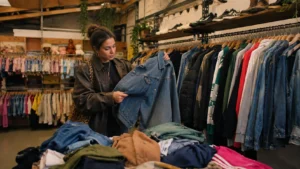
Not all categories are equally profitable. Based on seller community data and the January 2026 Resell Reserve guide, the strongest-performing niches in the UK market are:
Clothing Brands With Consistent Demand
Lululemon, Gymshark, Barbour, North Face, Ralph Lauren, BOSS, Adidas (specific trainers), Nike (Air Max and Jordan lines), Represent, Stone Island. These sell reliably because buyers search by brand and are willing to pay a margin over generic second-hand prices.
Children’s Clothing
High turnover, fast sales, price-insensitive buyers (parents replace outgrown items regularly). Brands that perform: Mini Boden, JoJo Maman Bébé, Next (smart/formal), M&S. A £3 charity shop find in good condition sells for £8–£15 routinely.
Vintage and Y2k Clothing
Strong Gen Z demand. Levi’s 501s, vintage band tees, 90s and 00s branded sportswear. Higher margins but requires more sourcing knowledge to identify genuine vintage from ordinary old clothing.
Homeware and Accessories
Vinted expanded significantly beyond clothing in 2024–2025. Books, ceramics, small homewares, and accessories now sell consistently. Lower price points but faster listing turnaround and less competition than clothing.
What Does Not Sell Well?
Generic unbranded fast fashion (SHEIN, Primark), heavily worn items without price justification, and anything with no-brand status in saturated categories.
Reselling on Vinted is still profitable in 2026, but more competitive than in earlier years success now comes from choosing the right brands, sourcing strategically, pricing realistically, and understanding seasonality.
The Two Reselling Approaches: Volume vs Margin
There are two main approaches to reselling on Vinted: volume-based, where you aim for £8–£12 profit per item and sell consistently to create regular cash flow; and margin-based, where you focus on higher-value items with £25–£40 profit per sale.
Volume Approach
List 20–30 items per week, price competitively, accept offers, and prioritise fast turnover. Works well for children’s clothing and generic branded items. Monthly income potential: £150–£400 part-time. High packaging and shipping time cost.
Margin Approach
List fewer items. Source more selectively. Price is higher, negotiate less. Wait for the right buyer. Works well for luxury, vintage, and specific sought-after trainers. Monthly income potential: £200–£600 on 15–20 sales. Less packaging time, more sourcing time.
Most consistent earners blend both a base of volume stock that sells quickly, supplemented by higher-margin pieces that increase average order value.
How Vinted Fees Work (and Why Sellers Keep More Than on eBay)

Unlike eBay, Vinted charges sellers zero fees; sellers keep 100% of their sale price. The buyer pays a buyer protection fee on top of the listed price, which covers Vinted’s revenue. The seller receives the full listed price.
This zero-fee structure is Vinted’s most significant commercial advantage over eBay (which charges 12.8% final value fee on most clothing) and Etsy (which charges a 6.5% transaction fee plus listing fees). On a £30 item, Vinted sellers keep £30. eBay sellers keep approximately £26.16.
Vinted Pro is a paid subscription tier (pricing not publicly listed but reported at £5–£15/month by sellers in community forums) that provides wardrobe boosts, better search visibility, and sales analytics. For sellers consistently selling 20+ items per month, the visibility uplift is typically worth the cost.
Shipping on Vinted is handled via integrated labels (Evri, InPost, Royal Mail) purchased through the app at discounted rates. Buyers pay postage costs; the seller does not pay for shipping on standard items.
The HMRC Rules Every Active Vinted Seller Must Know in 2026
This is the section most Vinted articles skip. Do not skip it.
The Trading vs Personal Selling Distinction
Selling your own possessions that you no longer need is not trading. You are not required to register for Self Assessment simply because you sold some old clothes.
HMRC is interested in whether you have a profit motive, whether you are buying or sourcing items specifically to resell them at a margin.
If you are regularly buying items specifically to resell at a profit on Vinted, that is trading, even if you are doing it from your sofa. Having a profit motive triggers the trading income rules.
The £1,000 Trading Allowance
Every UK individual receives a £1,000 trading allowance per tax year. If your gross Vinted income, the total amount buyers paid you, before any costs, stays below £1,000 across all self-employed activities combined, no tax is owed and no registration is required.
The 30-transaction HMRC Reporting Threshold
Since January 2025, Vinted reports seller data to HMRC if a seller meets either of these thresholds in a calendar year:
- 30 or more transactions, or
- Approximately £1,700 in total sales (€2,000 at the applicable exchange rate)
Either threshold triggers a report; you only need to cross one of them. The report goes to HMRC automatically. You do not opt in or opt out. If you have crossed either threshold and have not been declaring your income, HMRC now has your earnings data.
For the full explanation of how the £1,000 threshold works and what happens when you cross it, see our guide on how the 30-transaction HMRC threshold works in practice.
What the HMRC Report Contain?

Your name, address, National Insurance number, and total gross sales for the calendar year. HMRC cross-references this against Self Assessment records.
If you have filed a return showing side hustle income above £1,000, no action follows. If you have not filed and you met the platform threshold, you may receive a nudge letter.
The Practical Rule
If you sell more than 30 items per year or generate more than approximately £1,700 in total Vinted sales, assume HMRC has your data.
If your gross income across all side hustles combined was below £1,000 in the tax year, the trading allowance covers it and you owe nothing. If it was above £1,000, register for Self Assessment.
How to Increase Your Vinted Earnings?
Photographs Matter More Than Price
A well-lit photograph on a plain background, natural light, no clutter, item laid flat or on a hanger, sells faster and at a higher price than a dark photo of the same item. Most sellers who struggle to get sales have a photography problem, not a pricing problem.
Descriptions That Search and Sell
Include the brand, item type, size (using both label size and measurements), condition honestly, and any notable features. Buyers search by brand and keyword. A description that includes “Levi’s 501 straight leg jeans W32 L32 dark wash mid-90s vintage” will surface in more searches than “Levi’s jeans.”
Wardrobe Boosts
Vinted allows sellers to boost their wardrobe to the top of search results for a limited period. The cost is a small Vinted credit (purchased in-app). Sellers who time boost to Thursday and Sunday evenings when UK Vinted traffic peaks report higher sell-through rates.
Consistent Listing
Sellers who build a consistent income list regularly, track profit properly, and adjust sourcing based on real results rather than excitement. Listing 5–10 new items three to four times per week consistently outperforms a large one-off listing session followed by inactivity.
Reinvest Profits Into Better Stock
The natural growth pattern for a Vinted reseller: start with your own wardrobe (zero cost), generate initial profit, use that profit to source better stock from charity shops and car boots, increase margin and consistency. Sellers who try to start with purchased stock before proving the model often abandon the hustle before seeing real returns.
Frequently Asked Questions
Does Vinted charge sellers any fees at all?
No. Vinted charges buyers a buyer protection fee, but sellers receive 100% of the listed price. The only cost sellers pay is postage if they choose to offer free postage (not required; buyers typically pay postage on standard items). Vinted Pro is an optional paid subscription for increased visibility.
Can I sell things other than clothes on Vinted?
Yes. Vinted expanded its UK categories in 2024 and now supports homeware, books, accessories, children’s toys, and small electronics. Clothing and footwear remain the highest-volume categories but non-clothing items sell regularly.
Do I need a separate bank account for Vinted income?
Not legally, but practically yes for anyone earning more than occasional amounts. A separate account makes it straightforward to track gross income for HMRC purposes without combing through your personal bank statements.
What is Vinted Pro, and is it worth it?
Vinted Pro is a subscription tier that offers wardrobe boosts, better search positioning, and selling analytics. It is worth considering once you are selling 15–20+ items per month consistently. Below that volume, the organic platform is sufficient.
I sold some old clothes this year and made more than £1,000 gross. Do I need to register?
If your gross Vinted income from items you bought or made specifically to sell exceeded £1,000 in the tax year, yes. If the income came entirely from selling your own personal possessions at or below what you originally paid, it is likely not trading income, but if you have any doubt, check using HMRC’s help-for-hustles tool at gov.uk or speak to an accountant.
What to Read Next?
For a side-by-side comparison of Vinted and delivery platforms by hourly equivalent, see our article on another platform comparison worth reading alongside this.
For the full explanation of how your Vinted income is taxed and when registration is required, see our guide on how the 30-transaction HMRC threshold works in practice.

More in Platforms & Apps

Etsy UK First Sale Guide: Setup to Sale (2026 Beginner Walkthrough)
Most Etsy guides tell you how to open a shop. This one tells you how to get your first sale, which is a different question. The honest timeline: most new Etsy sellers with no existing audience wait two weeks to three months for their first sale. Sellers who approach the platform systematically with clear photography, […]

Airbnb UK Spare Room Side Hustle: 2026 Earnings & Tax Guide
Renting a spare room on Airbnb is the side hustle with the most generous tax treatment in the UK. Under the Rent-a-Room scheme, you can earn up to £7,500 per year from renting a furnished room in your main home completely tax-free. No Self Assessment required, no receipts to keep, no tax to pay on […]